An SAP test library starts aging the day it is built. Merito pairs Tricentis Tosca with Claude and context engineering to keep that library current: test cases hydrated with live process and change context, real root cause analysis on every failure, and a framework that repairs itself under human review.
Most SAP test automation evaluations score day-one speed: pre-built test cases in the box, recorder speed, accelerator library size. Year two is where the budget goes, and year two is where libraries go stale.
Why SAP test libraries go brittle and stale
Brittleness comes from change. Every release cycle, SAP moves underneath the tests.
- Transports move configuration and custom code
- Support packages change standard behavior
- S/4HANA programs replace screens, tables, and transactions
- Fiori updates reshape the UI layer
Staleness comes from drift. The repository keeps growing while the business keeps moving.
- Tests prove process steps the business retired two releases ago
- Duplicate tests cover the same path across teams
- Orphaned tests have no owner and no documented expected result
- New changed-and-used objects have no coverage at all
The result is a regression suite nobody trusts, manual testing creeping back in, and licenses that keep renewing.
Model-based automation is the foundation
Tricentis Tosca builds tests from Modules that hold the technical details of each screen or transaction. When a Module changes, Tosca updates every TestStep built from it, so one fix covers hundreds of tests. SAP Enterprise Continuous Testing delivers the same capability on SAP paper.
Model-based automation concentrates the maintenance. Context engineering is what keeps the library current.
Context engineering turns Tosca into a living framework
Claude reasons well when it sees the right context. Merito connects Claude to four layers of an SAP landscape, with permissions and human review designed in.
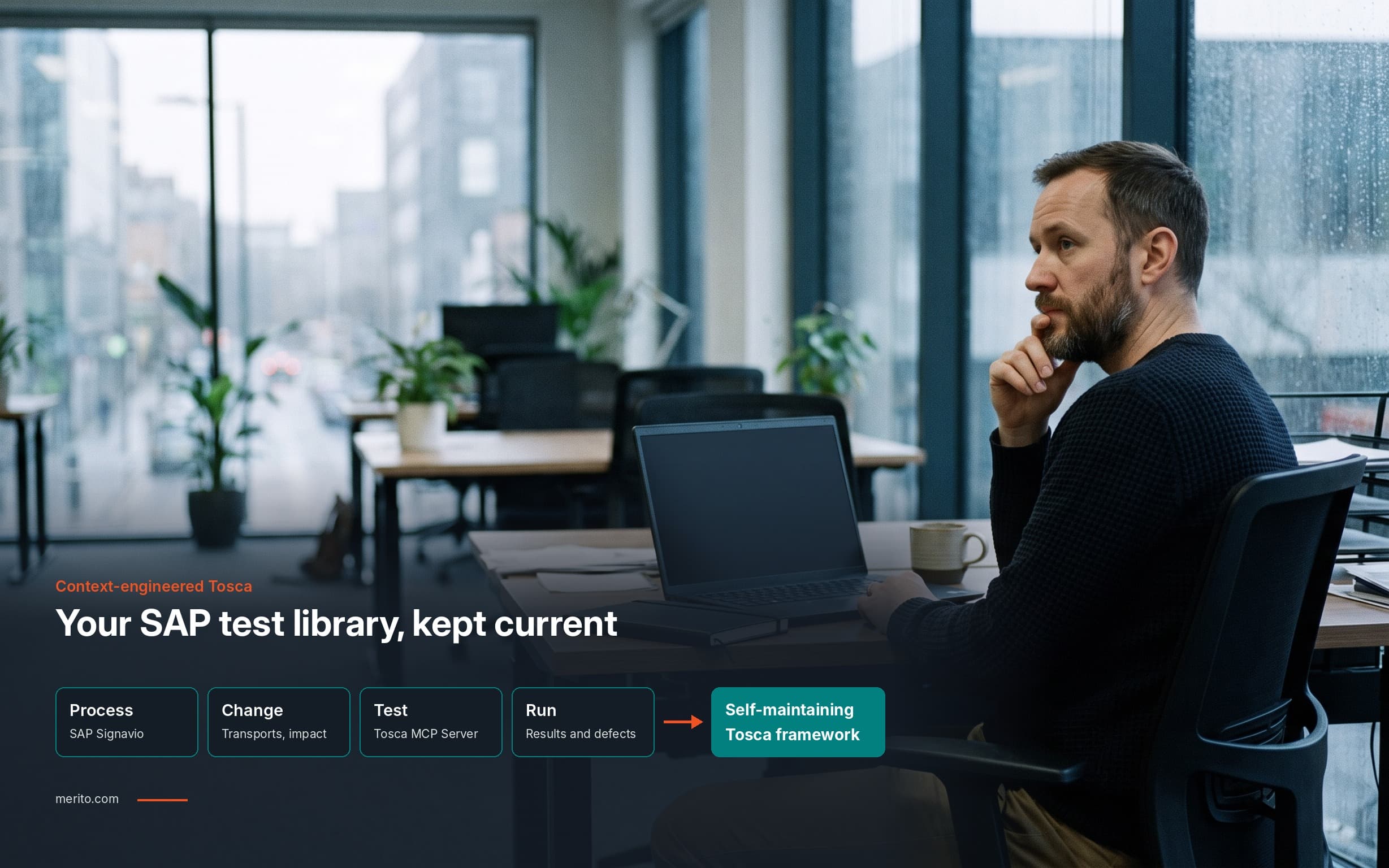
- Process context from SAP Signavio, defining which business steps each test has to prove
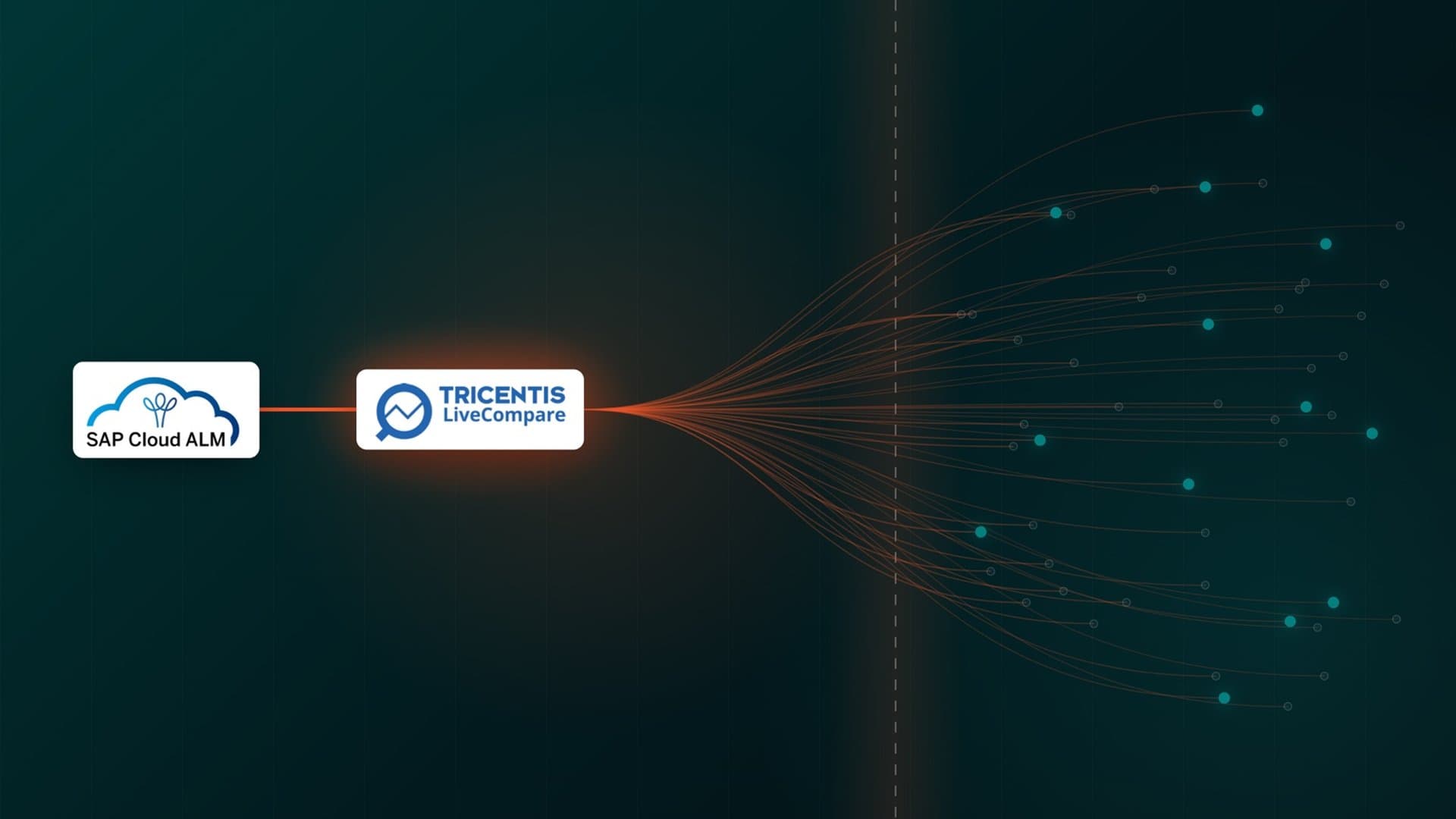
- Change context from transports, support packs, and Tricentis LiveCompare impact analysis
- Test context from the Tosca repository through the Tosca MCP Server
- Run context from execution results, logs, and defects
With all four in view, the framework maintains itself.
- Hydrates test cases with process steps, test data needs, and expected results drawn from Signavio and requirements
- Retires stale tests that no longer map to a live process step, and merges duplicates
- Runs root cause analysis on every failure, tracing it to the transport, configuration change, data issue, or test defect behind it
- Repairs Modules when screens change, with a named owner approving each update before it merges
- Scopes regression to what changed and is used this cycle
- Fills coverage gaps by drafting new tests for changed objects nothing validates today
The library stops aging in place. Every cycle, it learns what moved and adjusts.
Four questions to ask before you sign
- When a transport changes a screen your tests touch, how many artifacts need a human to fix them, and how do you find out which ones?
- Does the platform cover your actual landscape, including SAP GUI, Fiori, APIs, and the non-SAP systems your processes cross into?
- Who decides regression scope each release, and what evidence backs that decision?
- Does the framework read your process and change context alongside its own test repository?
A vendor that answers with the size of its test library is describing day-one speed.
Where Merito fits
Merito is an authorized Tricentis reseller and services partner, listed as a Certified Solution Partner in the Tricentis partner directory. Merito delivers Anthropic Claude strategy, rollout and operations services, and US public-sector buyers can order Claude licenses through Merito on GSA MAS contract 47QSWA18D008F.
That combination is the offering. Merito implements Tosca and SAP ECT for SAP testing programs, then engineers the Claude context around them across Signavio, the SAP system, and the test repository. It takes a Claude partner that also knows Tosca and SAP to build it.
Book a consultation before you score the demos, and Merito will show what a self-maintaining Tosca framework looks like on your landscape.