Insights

Merito Insights

Fresh thinking on secure software delivery, DevOps best practices, and the people-first approach that powers our clients’ success.

Two colleagues reviewing SAP release results on a laptop in a glass-walled meeting room, beside a four-step Tosca Cloud migration plan covering test library triage, hybrid execution, ownership and access, and risk-based release gates.
SAP Testing

Tosca Cloud Migration From Tosca Commander for SAP Testing Teams

A Tosca Cloud migration moves SAP test automation from Tosca Commander on company servers to the Tricentis-hosted SaaS version of Tosca. Teams can upgrade on-prem to Tosca 26.1 in about 10 to 14 weeks or migrate to Tosca Cloud in about 12 to 22 weeks. A phased plan triages the test library, runs DEX and Elastic Execution Grid in hybrid, assigns ownership, and connects results to release gates. Merito delivers this work as a Tricentis Certified Solution Partner.

  • Tricentis Tosca
  • Tosca
  • Tricentis
  • SAP Testing
  • SAP Test Automation
  • Test Automation
  • CI/CD
  • Migration Testing
Two colleagues at a glass wall covered in hundreds of sticky notes, one pointing at a row of five white cards pinned at eye level.
Test Management and Traceability

AI Test Case Sprawl Is Burying Your Release Evidence. Scenario Approval Should Have Stopped It.

AI test case generation in tools like TestRail, qTest, and Xray makes cases nearly free to produce, so suites grow faster than teams can review, run, or maintain them. The fix is a scenario gate: define risk-based test scenarios first, have an accountable owner approve them, and generate cases only inside approved scenarios with a per-scenario cap and deduplication. Every case then traces to a requirement and a risk, which gives leaders real release evidence and shows which manual cases deserve automation first.

  • AI
  • Test Management
  • Test coverage
  • Test Automation
  • QA
  • Enterprise Testing
  • Audit
  • TestRail
  • qTest
  • Xray
  • Jira
  • Tosca
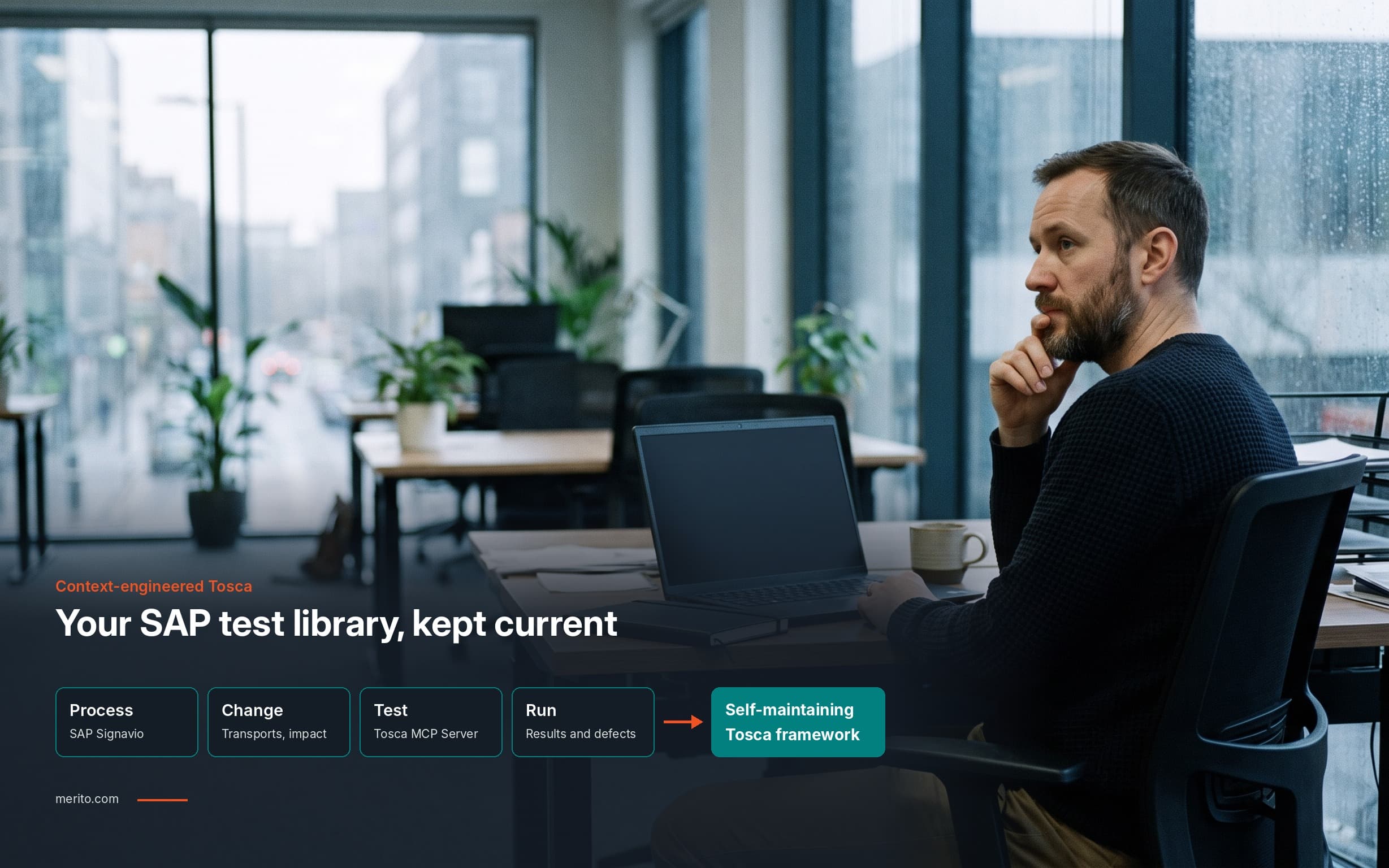
An SAP test engineer at a desk in a quiet office, thinking beside a laptop, with a diagram showing process, change, test, and run context feeding a self-maintaining Tosca test framework.
SAP Testing

Your SAP Test Library Starts Aging the Day You Build It

SAP test libraries go brittle as transports, support packages, S/4HANA programs, and Fiori updates change the system, and go stale as tests drift from the live business process. Merito pairs Tricentis Tosca and SAP Enterprise Continuous Testing with Claude and context engineering. Claude reads process context from SAP Signavio, change context from transports and Tricentis LiveCompare, test context through the Tosca MCP Server, and run context from results, so the framework hydrates test cases, retires stale tests, runs root cause analysis, and proposes Module repairs for human approval.

  • Tricentis Tosca
  • Tosca
  • Tricentis
  • SAP Test Automation
  • SAP Testing
  • Test Automation
  • S/4HANA
  • AI
  • Enterprise AI
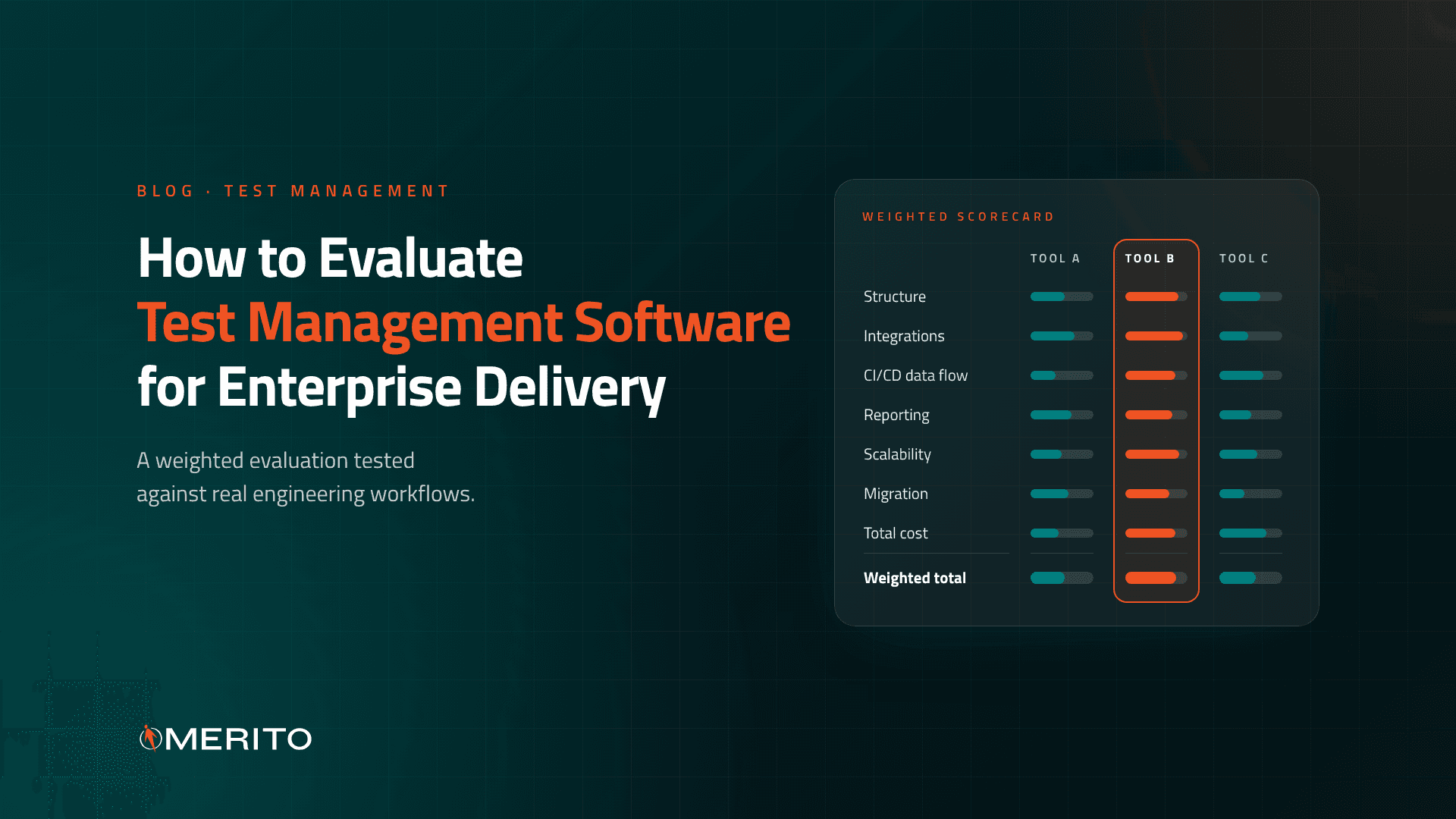
Merito blog cover for How to Evaluate Test Management Software for Enterprise Delivery, showing a weighted scorecard that compares three tools across structure, integrations, CI/CD data flow, reporting, scalability, migration and total cost.
Test Management and Traceability

How to Evaluate Test Management Software for Enterprise Delivery

Enterprise test management software should be evaluated against real workflows, not generic feature lists. Use weighted requirements and a proof of concept to validate structure, integrations, reporting, scalability, migration, and total cost before making a selection.

  • AI
  • CI/CD
  • Test Automation
Claude Partner Network badge reading Select Services Partner, centered on an orange background.
AI in Software Delivery

Merito Achieves Select Partner Tier in the Claude Partner Network

Merito has achieved the Select partner tier in the Claude Partner Network Services Track. The Claude Partner Network is how Anthropic works with the firms that put Claude into production for customers. Merito delivers Anthropic Claude strategy, rollout and operations services across AI Rollout and Activation, Agentic Build, and Managed AI Operations.

  • AI
  • Enterprise AI
  • AI Adoption
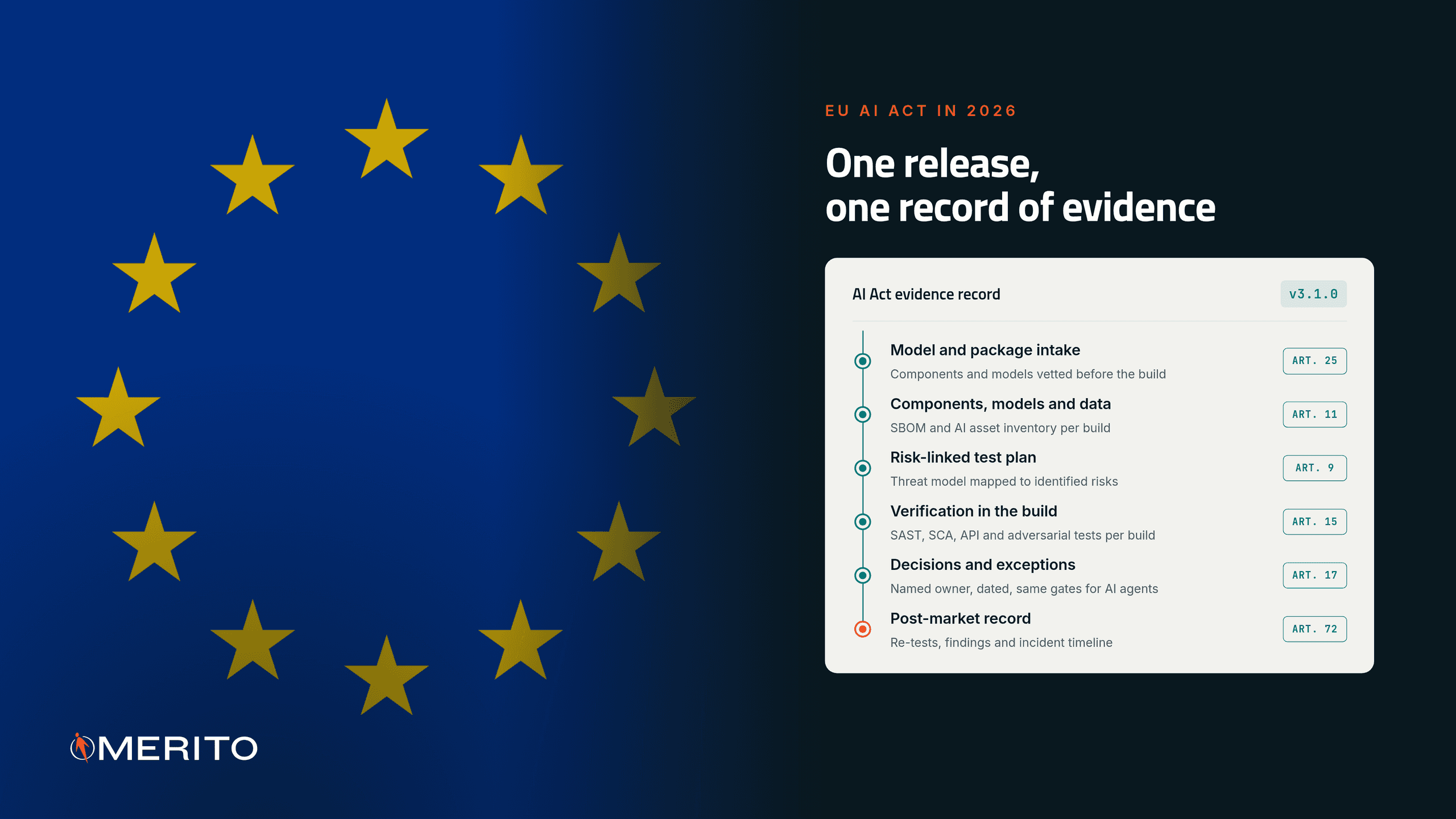
EU flag fading into a dark panel headed “EU AI Act in 2026: One release, one record of evidence,” with a six-step evidence path: model and package intake (Art. 25), components, models and data (Art. 11), risk-linked test plan (Art. 9), verification in the build (Art. 15), decisions and exceptions (Art. 17), and post-market record (Art. 72).
Application Security and DevSecOps

A Holistic Approach to Secure Development Under the EU AI Act

This article explains how organizations can meet the secure development expectations of the EU AI Act after the Digital Omnibus on AI (Regulation (EU) 2026/1744). It maps the Act's security-relevant articles, especially Article 15, to application security evidence for three roles: GPAI model producers, AI system builders, and acquirers or deployers. It separates binding obligations from voluntary guidance and draft standards such as prEN 18282, covers the Cyber Resilience Act overlap, and describes how Merito helps connect existing AppSec capabilities into release-level evidence.

  • Application Security
  • Compliance
  • SBOM
  • DevSecOps
  • SDLC
  • AI
  • Audit
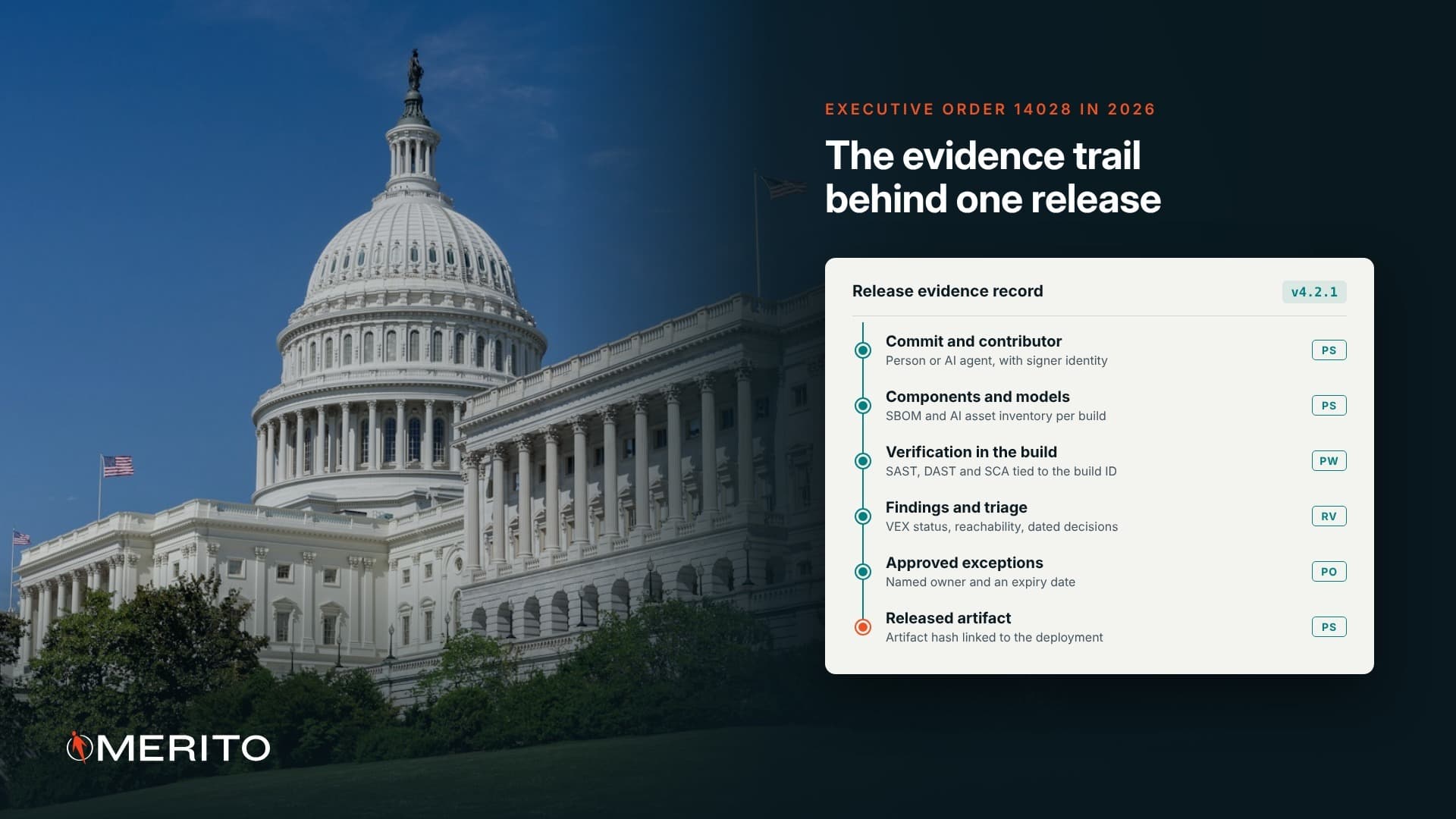
Illustration of a release evidence record for version 4.2.1 beside the US Capitol. It traces six linked steps tagged with their SSDF practice groups: commit and contributor, components and models, verification in the build, findings and triage, approved exceptions, and released artifact. Merito logo bottom left.
Application Security and DevSecOps

Executive Order 14028 in 2026: What Federal Buyers Will Ask Your AppSec Program

Executive Order 14028 remains in effect, but OMB memo M-26-05 (January 2026) replaced the standard secure software attestation with agency-led, risk-based review, and FAR Case 2023-002 was withdrawn in March 2026. Executive Order 14409 (June 2026) adds voluntary AI security mechanisms without new contractor obligations. This article explains what federal buyers are likely to ask software suppliers, how SBOM, VEX, and AI asset inventory fit in, and how the SSDF supports a release-level evidence chain.

  • Application Security
  • Compliance
  • SBOM
  • DevSecOps
  • SDLC
  • AI Coding
  • Audit
  • Executive Order 14028
  • EO 14028
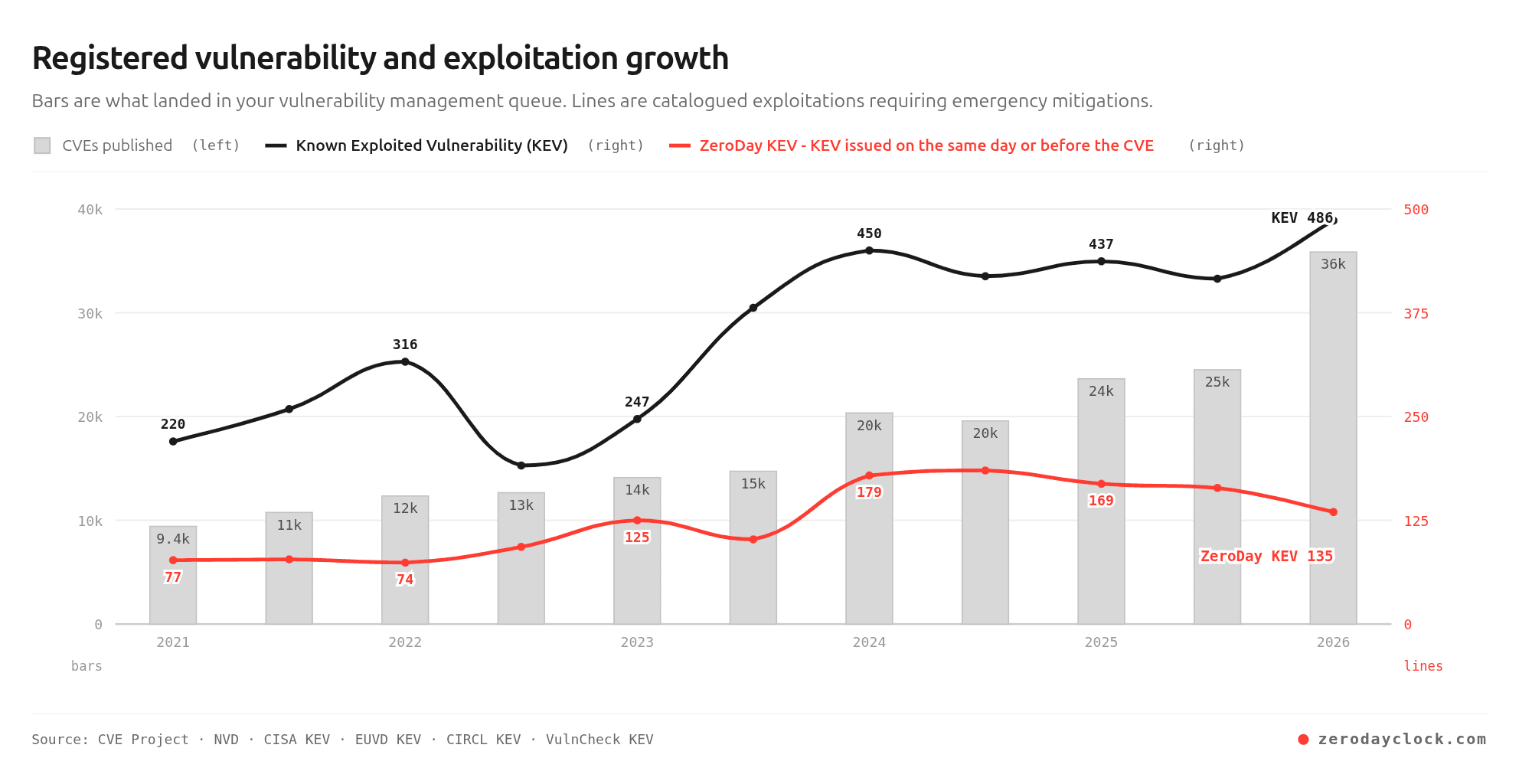
Chart from zerodayclock.com of registered vulnerability and exploitation growth from 2021 to 2026. CVEs published per half year rise from 9.4k to 36k while known exploited vulnerabilities (KEV) rise from 220 to 486.
Application Security and DevSecOps

Checkmarx Fusion: How Hybrid Scanning Raises SAST Accuracy

Checkmarx Fusion is a hybrid vulnerability detection layer in Checkmarx One that combines deterministic, rules-based SAST with a language-agnostic AI engine and curated frontier AI models, reconciled into a single result set. Checkmarx reports an F1 score of 0.741, versus roughly 0.20 for legacy rule-based SAST, and describes the approach as producing consistent results across scans while extending coverage to vulnerabilities with no existing rule or CVE.

  • Checkmarx
  • SAST
  • Application Security
  • DevSecOps
  • AI
artificial intelligence used for testing automation
Test Management and Traceability

Making Spira Product Migration an Enterprise Delivery Capability

The Spira Product Migration Tool is designed to move complete products between separate instances of SpiraTest, SpiraTeam, and SpiraPlan, including product artifacts and their surrounding configuration. For enterprises, this supports controlled ALM migration during mergers, divestitures, consulting handoffs, and infrastructure consolidation. Merito can help organizations plan migration governance, validate outcomes, and accelerate adoption of Inflectra solutions.

  • Inflectra
  • SpiraPlan
  • GenAi

Frequently Asked Questions

Questions about the Merito blog